
 0552 580 50 17
  0552 580 50 17
  0216 446 34 29
  Facebook
  Twitter
  Youtube
STAINLESS STEEL 3.2 CERTIFICATION
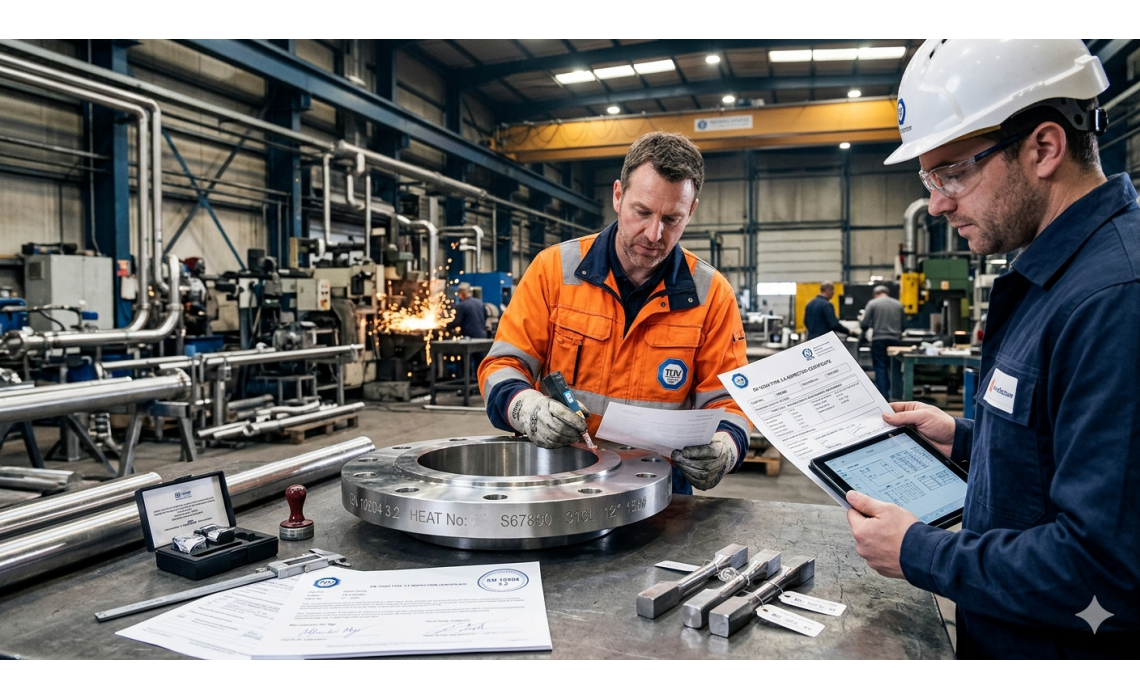
In industrial projects, especially where high pressure, extreme temperatures, or corrosion risks are present, material quality is not just a preference—it is a necessity. The most prestigious and reliable document you will encounter in the stainless steel supply chain is the EN 10204 3.2 Certificate.
So, what exactly is this certificate, and why is it considered the "gold standard"? Let's detail this process that guarantees the safety of your project.
What is the EN 10204 3.2 Certificate?
The EN 10204 standard is the European standard defining inspection documents for metal products. The 3.2 Certificate represents the highest level of this standard.
The fundamental difference that distinguishes this certificate from a 3.1 certificate is independent inspection. While a 3.1 certificate is validated by the manufacturer’s own quality department, a 3.2 certificate is a "double-signed" document validated by both an independent inspection body (such as TÜV, Lloyd’s Register, Bureau Veritas, etc.) and the purchaser’s representative.
How Does the 3.2 Certification Process Work?
The process is not merely a paper-based approval; it is a physical chain of inspection. Here are the step-by-step 3.2 certification stages:
Preparation and Notification: The manufacturer notifies the independent inspection body that production is set to begin.
Material Traceability: The inspector verifies the accuracy of heat numbers from the raw material stage onwards.
Sampling and Testing: Samples are cut from the material under the supervision of the inspector. These samples undergo tests such as tensile, impact, and chemical analysis.
Witnessing: Laboratory tests are performed in the physical presence of the inspector. Compliance with standards is verified on-site.
Stamping and Approval: Materials that successfully pass the tests are sealed or hard-stamped by the inspector.
Documentation: Once all data is collected, both the manufacturer and the independent body sign the document to complete the process.
Why Choose 3.2 Certified Stainless Steel?
The critical advantages of using 3.2 certification in your stainless steel projects include:
Zero Margin for Error: Inspection by a third eye completely eliminates potential production defects or false declarations.
Legal Compliance: It is a legal requirement in critical sectors such as nuclear power, the defense industry, and offshore oil platforms.
International Validity: Material with this certificate is accepted as top-quality class anywhere in the world.
Risk Management: It serves as your strongest legal and technical defense mechanism in the event of any potential material failure in the future.
Which Sectors Require It?
Not every project may require 3.2 certification (as it increases costs and lead times), but it is essential in the following fields:
Oil and Gas: Pipelines and refineries.
Pressure Vessels: Equipment falling under the PED (Pressure Equipment Directive).
Marine: Shipbuilding and subsea structures.
Nuclear Power Plants: Facilities requiring maximum security.
Requesting a 3.2 certificate when purchasing stainless steel means guaranteeing the lifespan and safety of your project. If you are conducting high-risk engineering work, seeking the assurance of "independent inspection" should be viewed as an investment rather than a cost.


